Meet Finnie: the AI money guide that explains, remembers and never pushes a stock

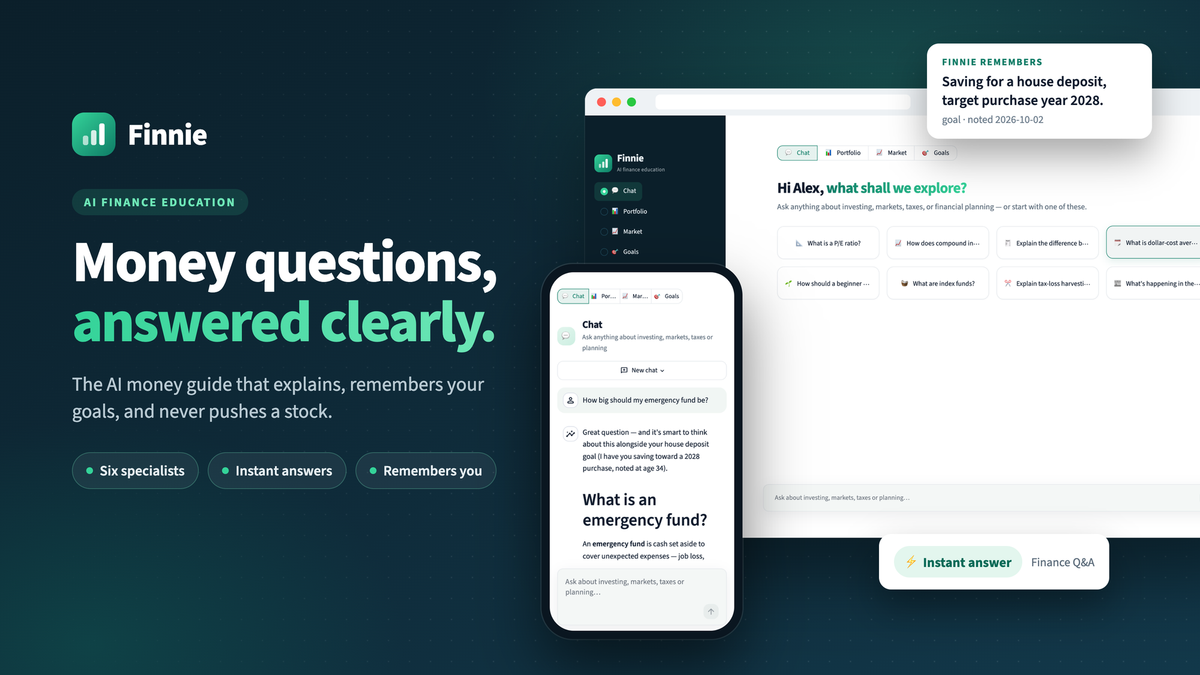
Most of us learned about money by guessing. We nod along to "expense ratio" and "Roth conversion", and hope a search result or a friend fills the gaps. Finnie is a different kind of help: an AI guide that explains how money, markets and taxes work, in plain language, at your pace.
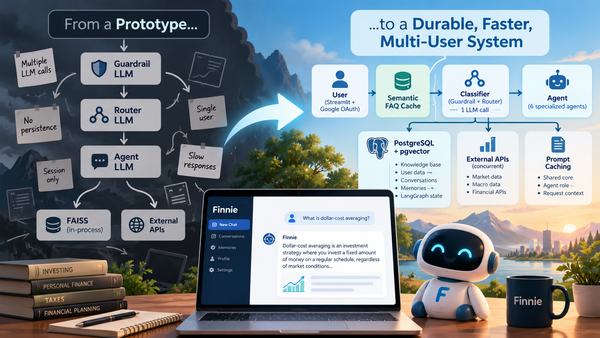
Finnie is not a robo-advisor and never tells you what to buy or sell. It teaches. Behind one simple chat sit six specialists — for general finance questions, portfolios, markets, goal planning, news and taxes — plus live market data, a curated knowledge base, and a memory for the things you choose to share. Here is a tour of every screen.
Ask anything, in your own words
Getting started takes one click: sign in with your Google account and you're in. No forms, no new password.
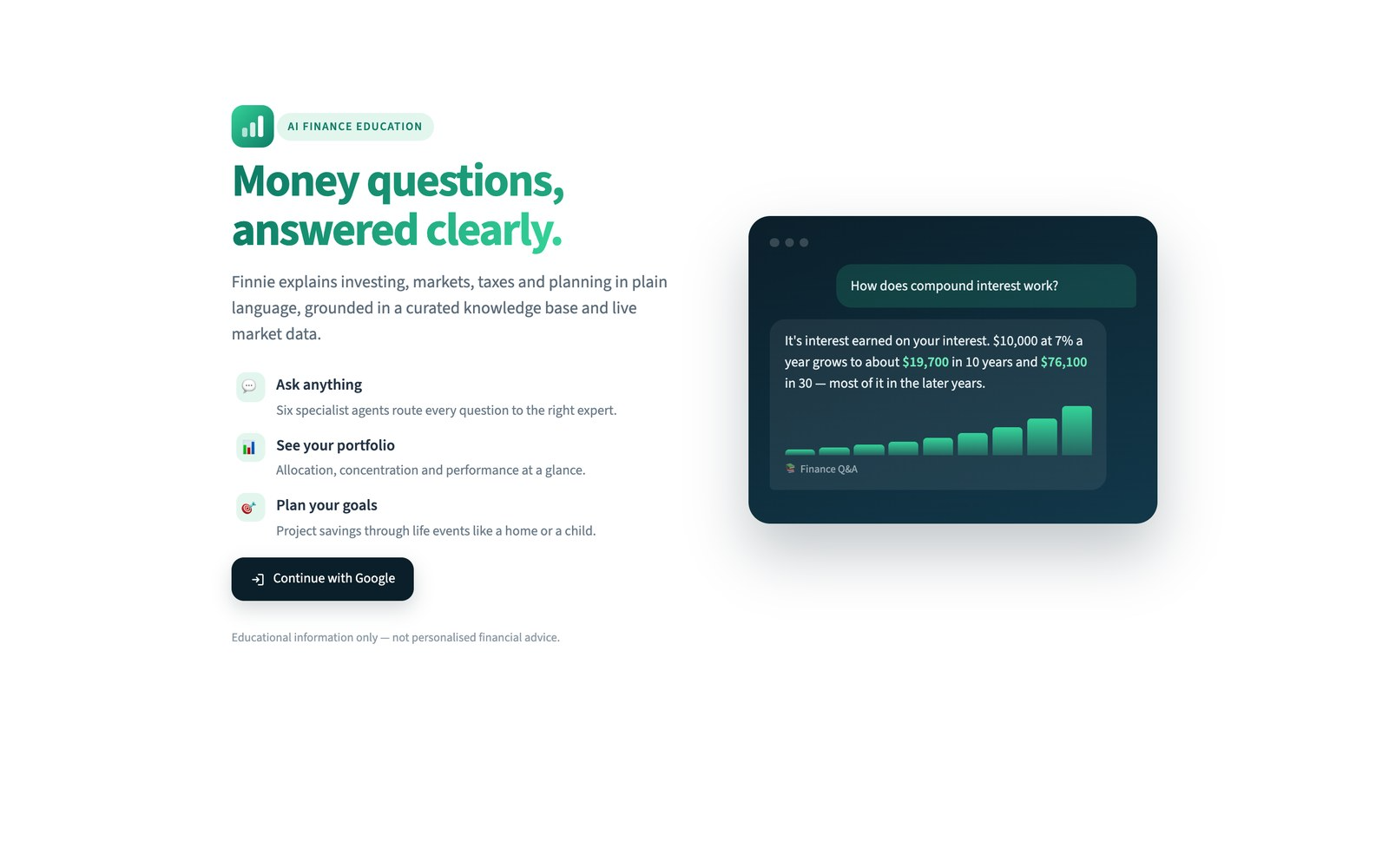
The chat greets you by name and offers starter questions, from "What is a P/E ratio?" to "Explain tax-loss harvesting". Or just type what's on your mind.
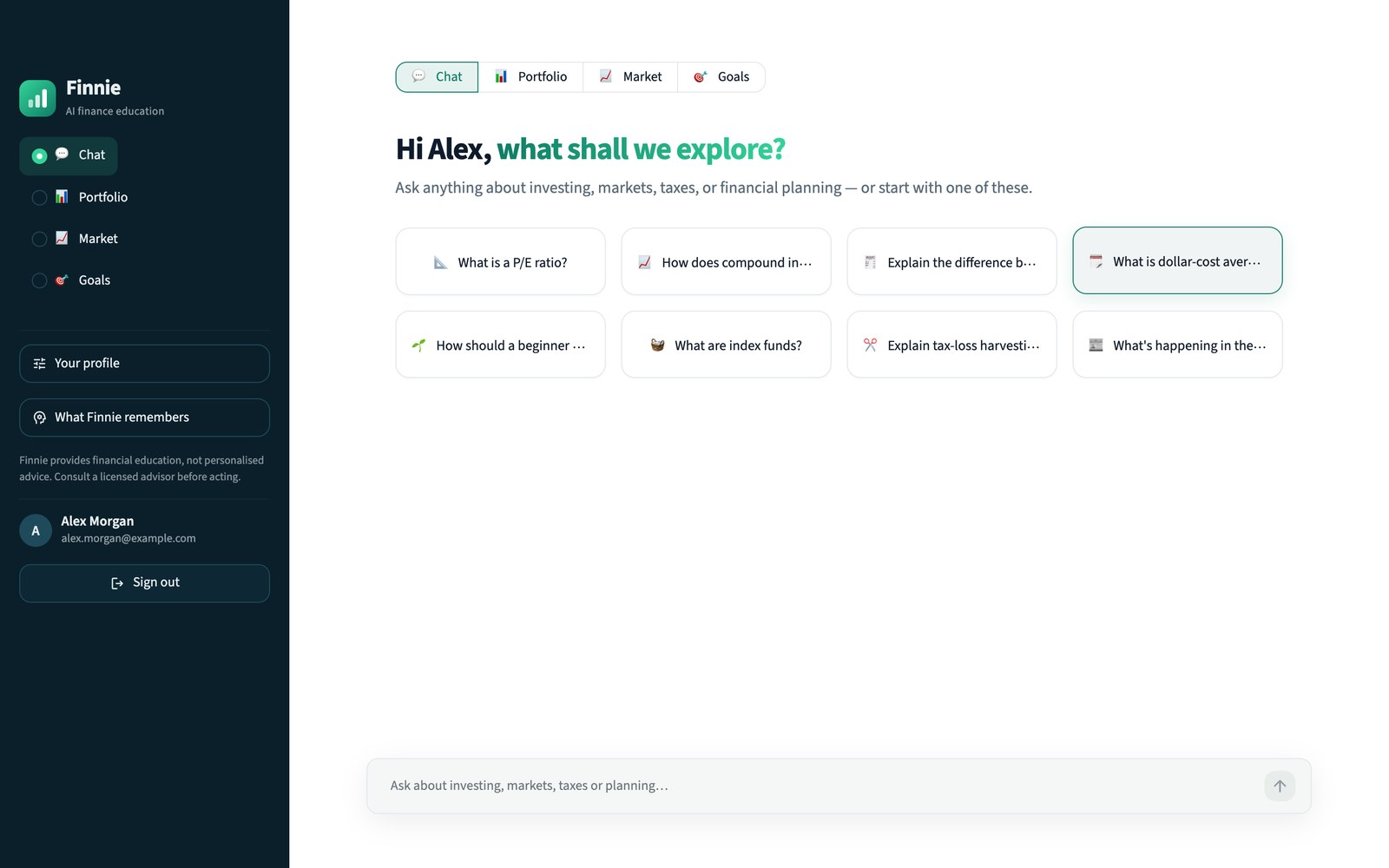
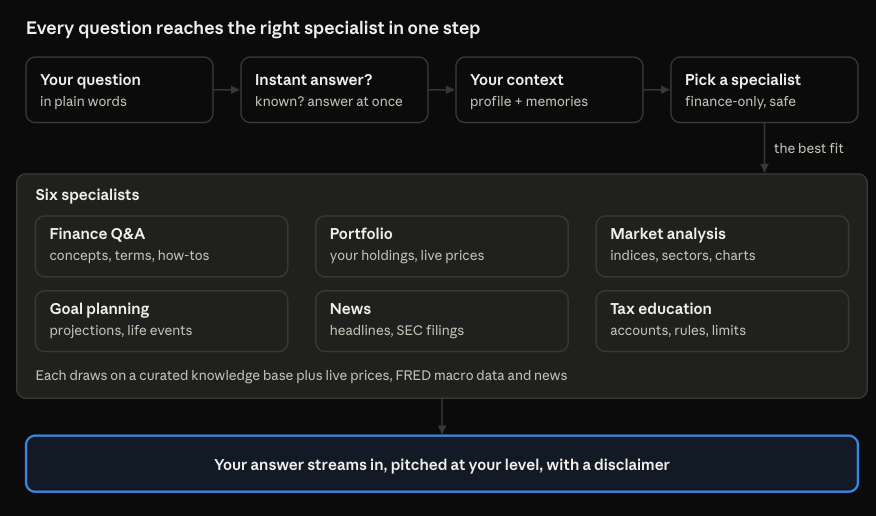
Every question is routed to the specialist best placed to answer it. Answers stream in as they're written, are pitched at your level (beginner, intermediate or advanced), and end with a plain disclaimer. A small label shows which specialist answered and why.
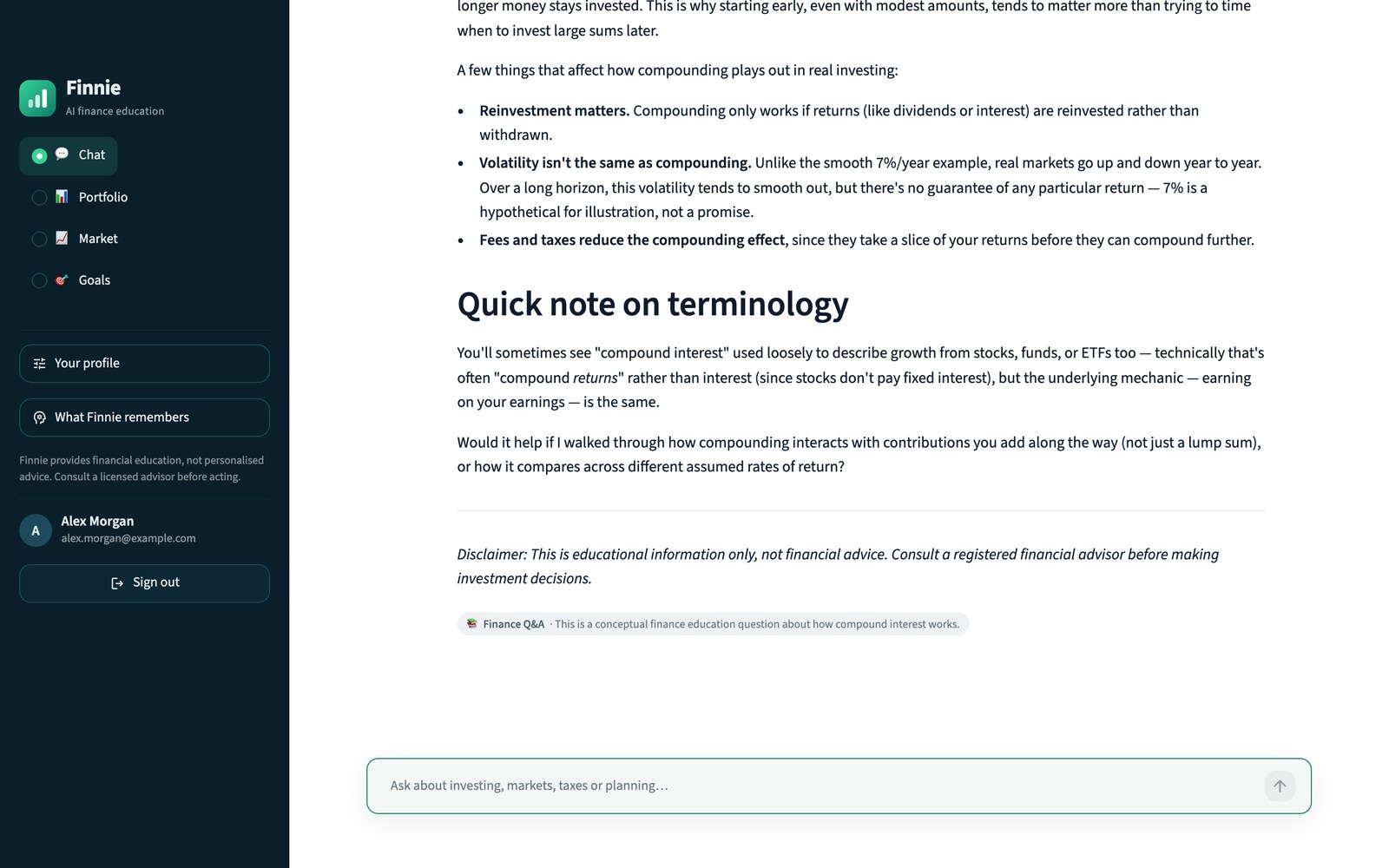
Popular questions, answered instantly
The big questions in personal finance come up again and again. When someone asks one Finnie has already answered well, even worded a little differently, the answer comes back instantly, with no wait for the AI. A lightning label tells you so.

Only answers that are safe to reuse are kept: general explanations and tax education, never anything built from live market prices or from what you've told Finnie about yourself. Cached answers expire when the knowledge base or the tax year changes, so an old answer never outlives the facts it was built on.
It remembers what matters to you
Mention a goal once ("I'm 34 and saving for a house deposit, we'd like to buy in 2028") and Finnie keeps it in mind. It notes durable facts in the background, so you never wait for it, and uses them to make later answers personal.
You stay in control. The "What Finnie remembers" panel lists every fact with the date it was noted. Delete any one, tap "Forget everything", or switch memory off entirely. Anything that looks like an account or card number, an email address or a password is filtered out before it's saved.
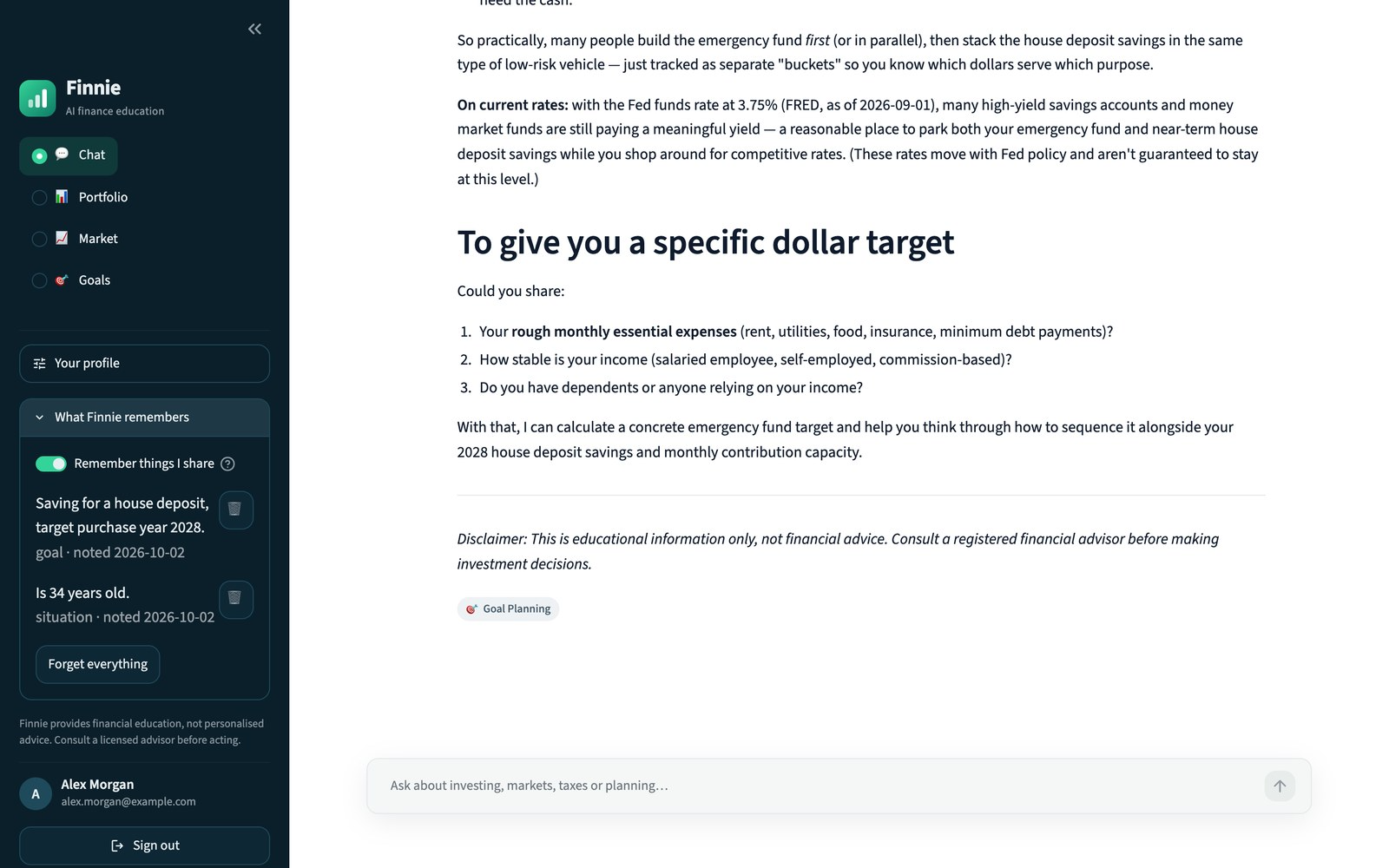
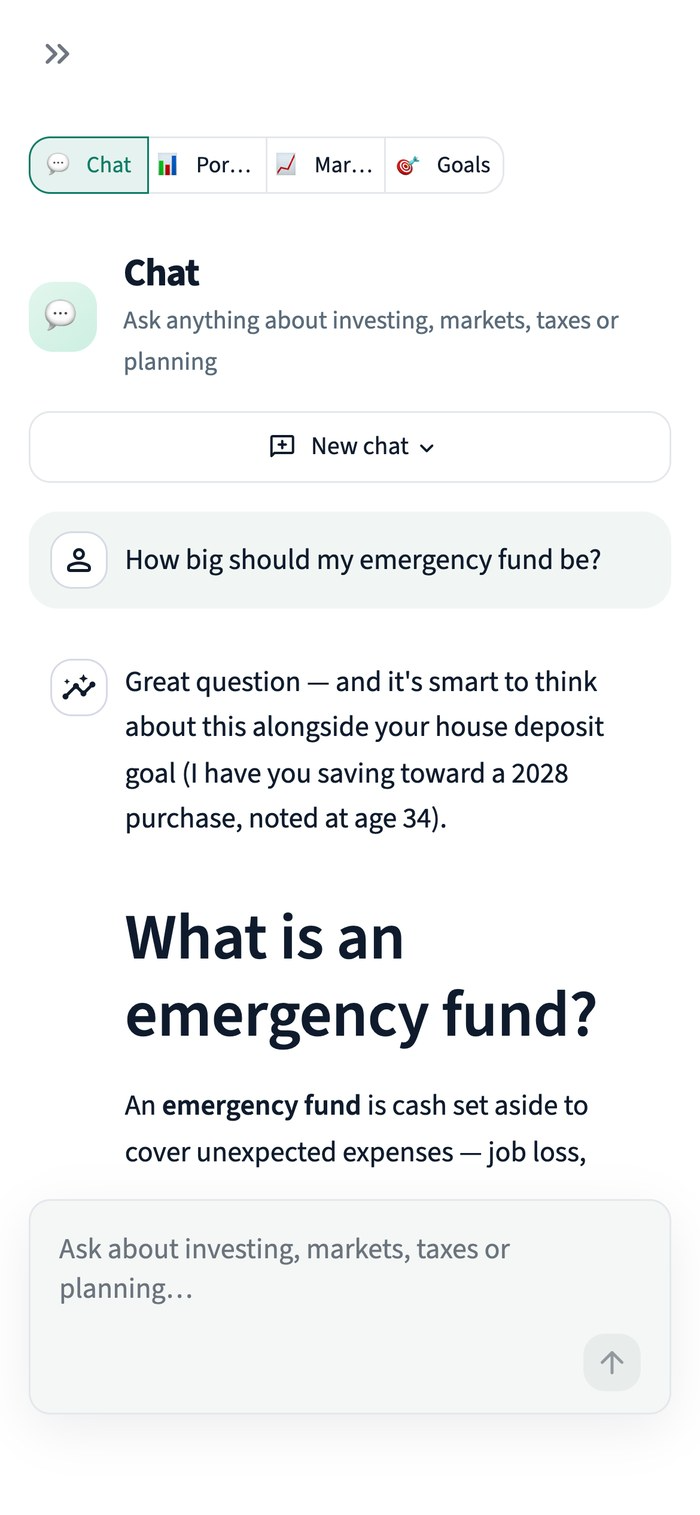
Here's what that feels like. In a brand-new conversation, asked only "How big should my emergency fund be?", Finnie opened with:
Great question — and it's smart to think about this alongside your house deposit goal (I have you saving toward a 2028 purchase, noted at age 34).
An X-ray of your portfolio
Type your holdings into a simple table (ticker, shares, average cost) and Finnie pulls live prices to show what you own at a glance: total value, gain or loss, how your money is split across holdings, and how each position has performed. Your holdings are saved, so they're there next time.
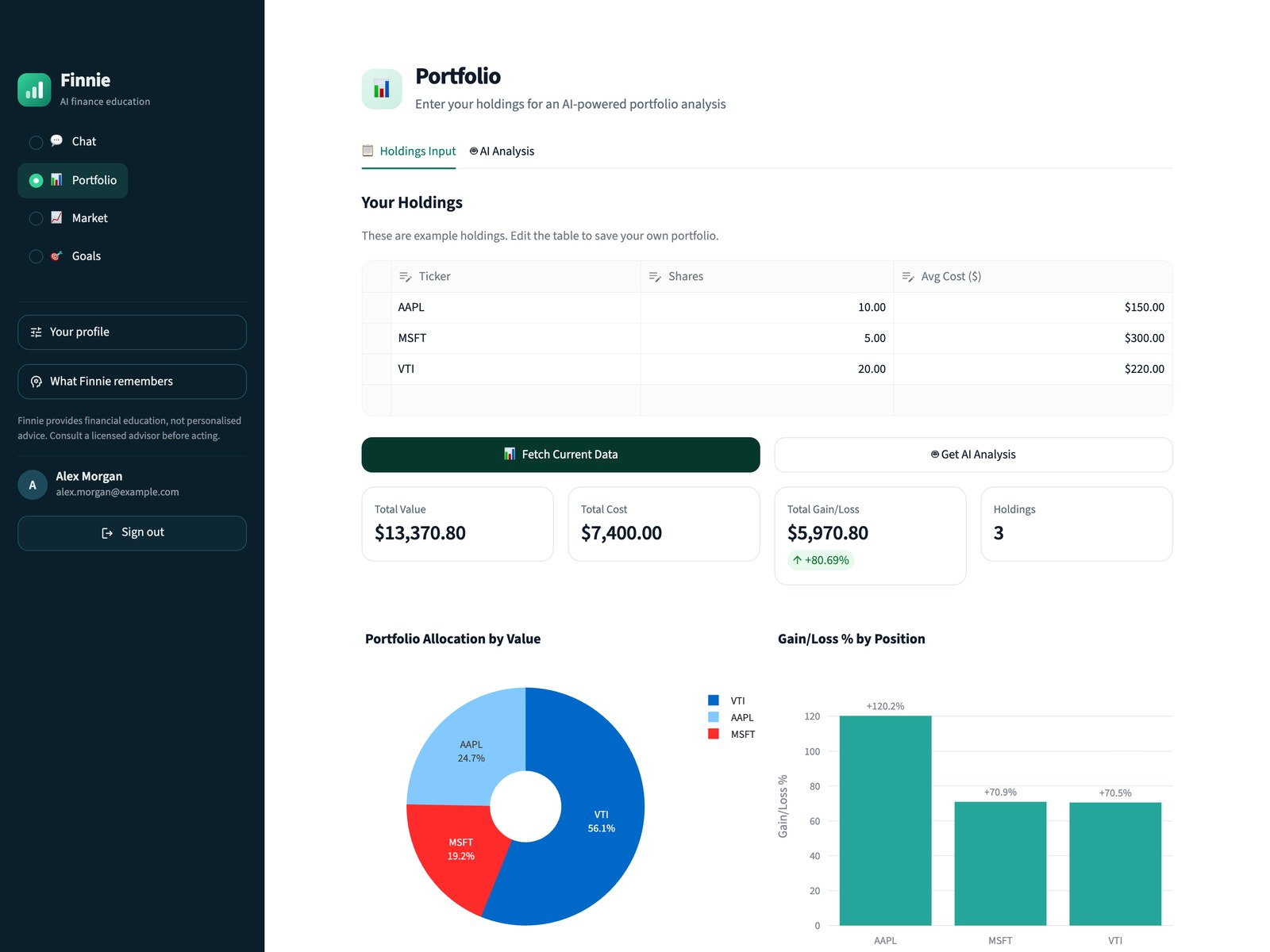
Then ask for the AI read-out. Finnie walks through performance, diversification and risk, explaining each metric as it goes. In this example it points out that two of three holdings are large tech companies, a concentration risk, and that the total-market fund is doing most of the diversifying. It explains; it doesn't tell you what to buy or sell.
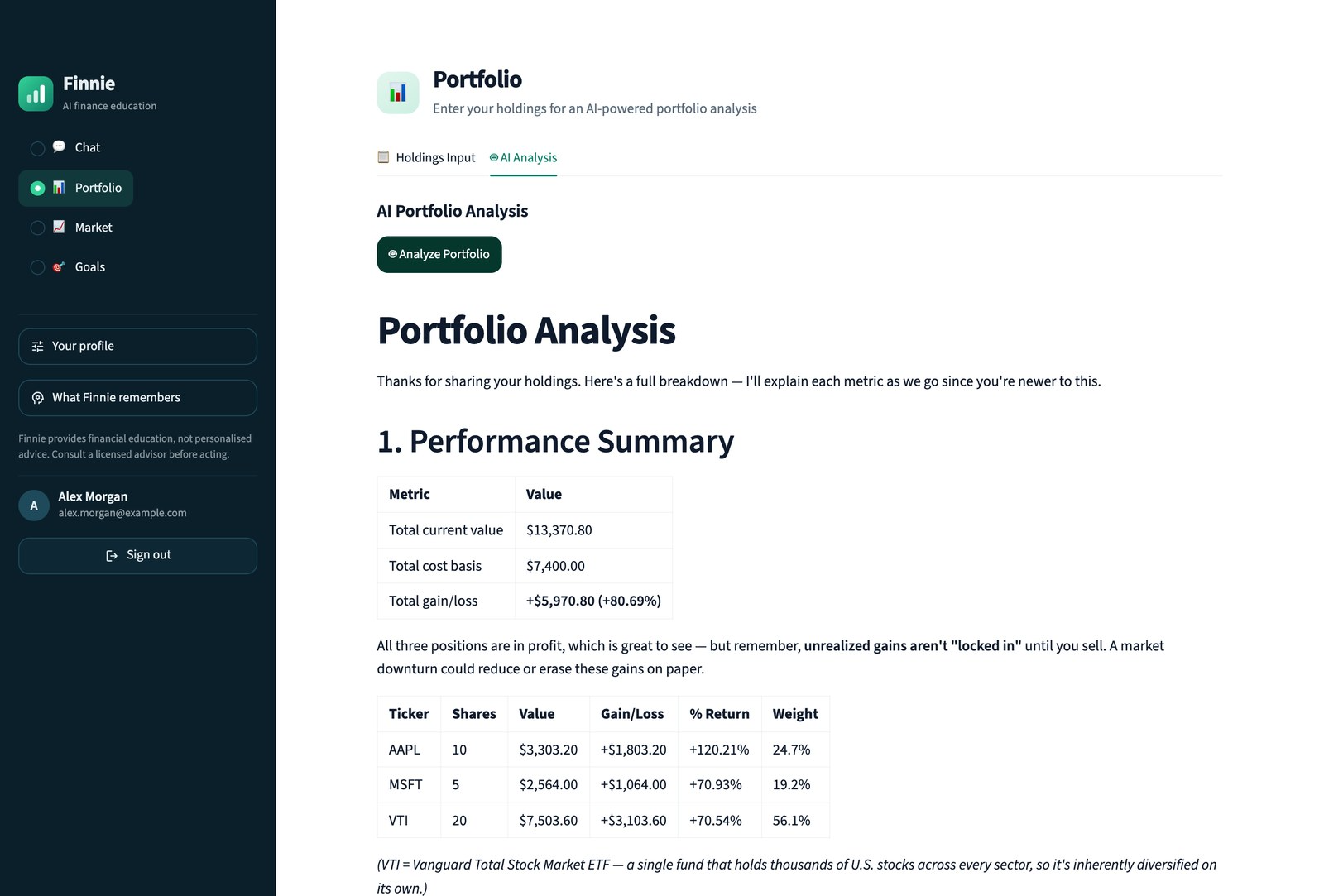
The chat knows your saved holdings too, so "How diversified is my portfolio?" works there as well.
The market, explained — not just shown
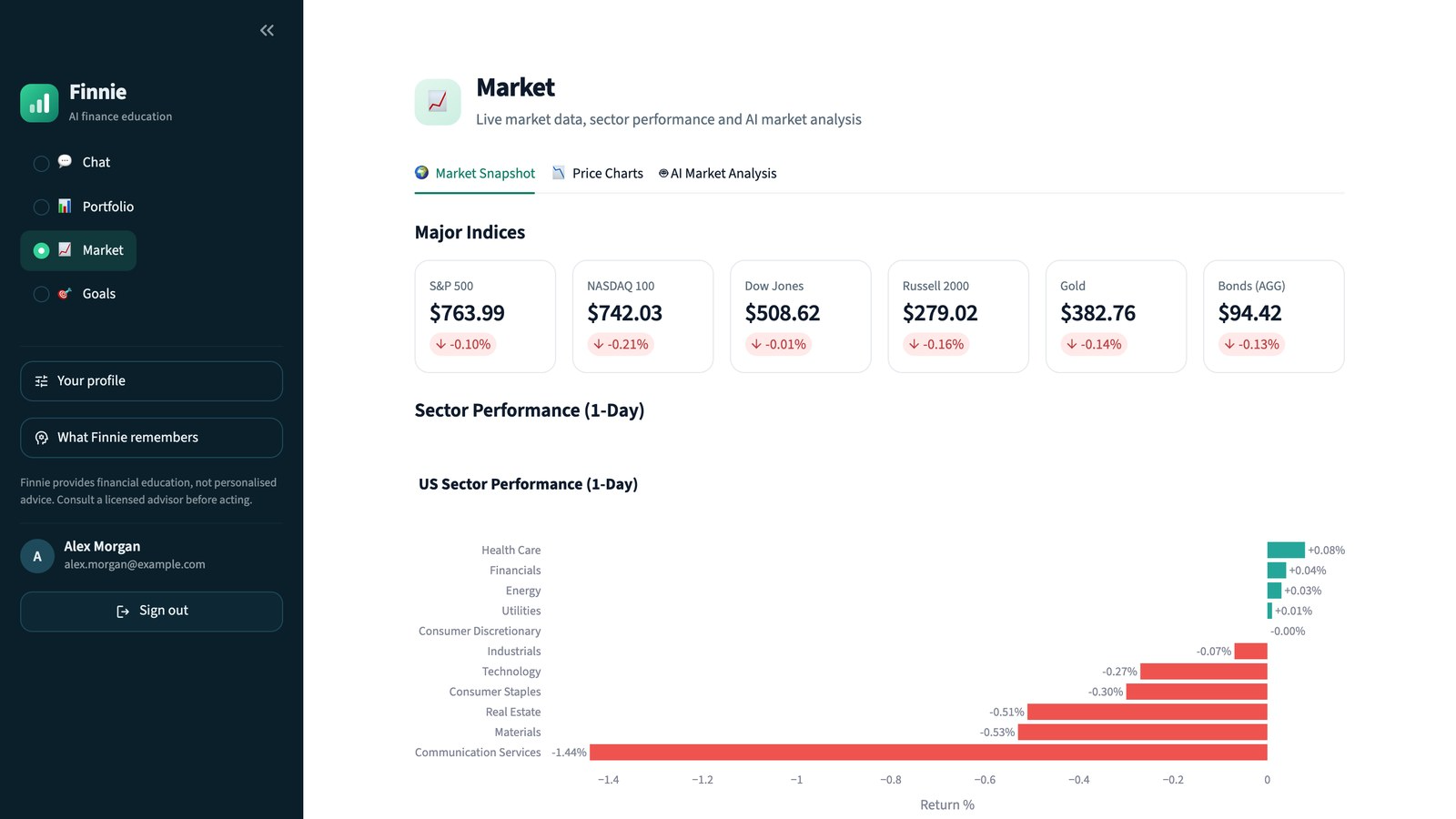
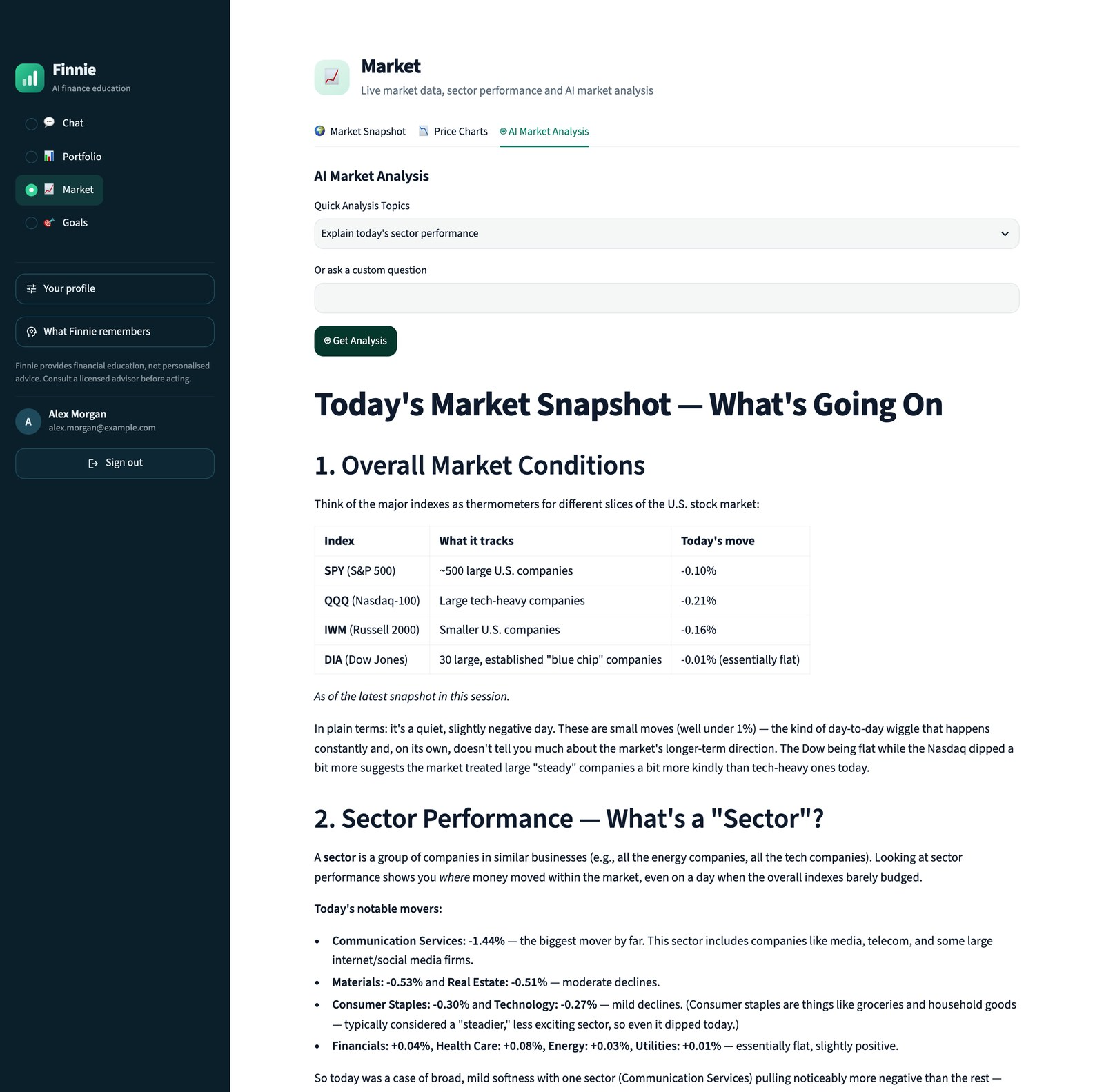
The Market tab opens on a live snapshot: the funds that track the S&P 500, Nasdaq 100, Dow Jones and Russell 2000, plus gold and bonds, and how every US sector moved today.
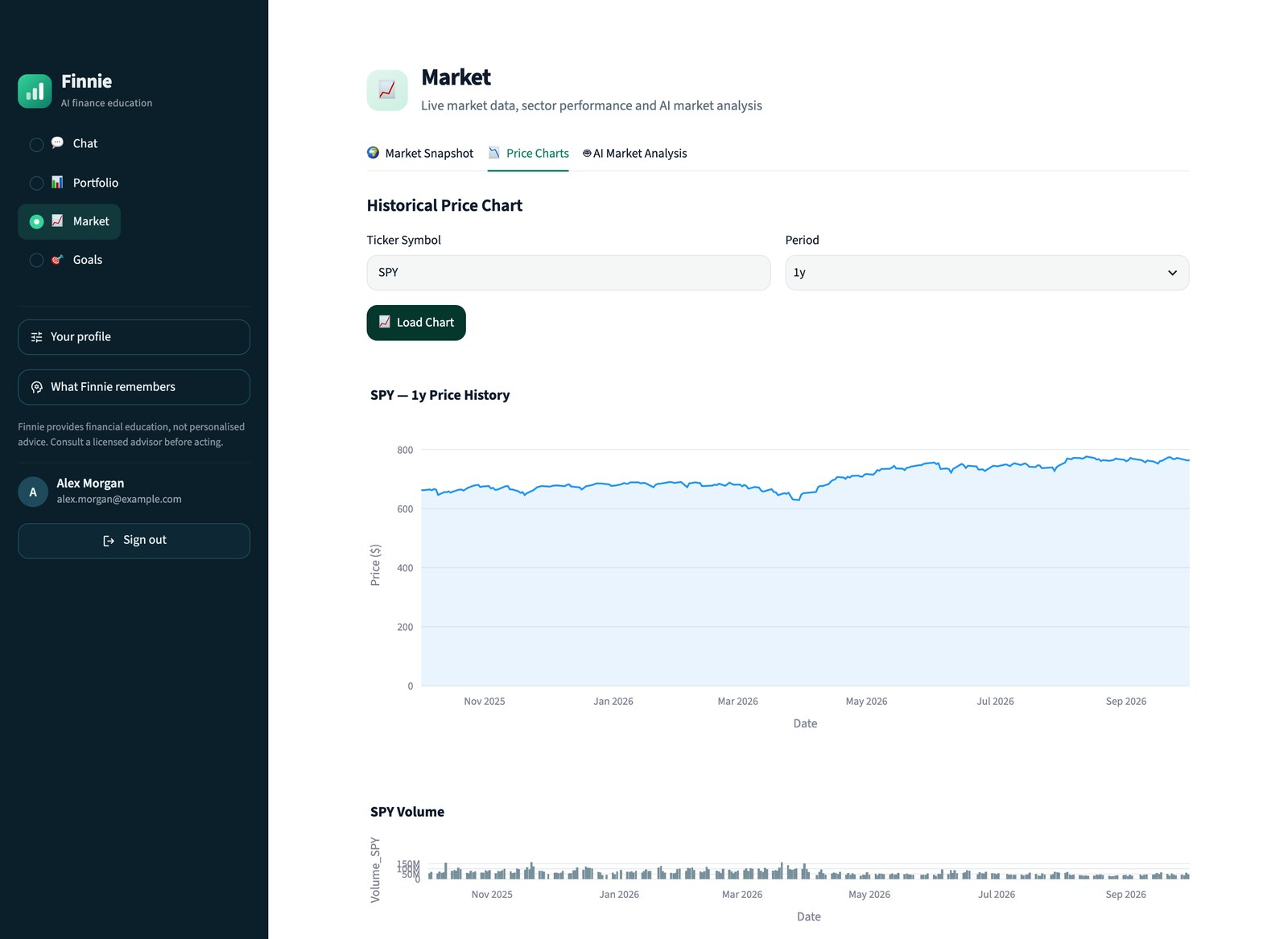
Look up the price history of any ticker over anything from one month to five years, with trading volume underneath.
The part most market apps skip is the explanation. Ask "Explain today's sector performance" and Finnie turns the numbers into a lesson: what each index tracks, what a sector is, and what a quiet, slightly negative day does and doesn't tell you.
Plan for life's big moments
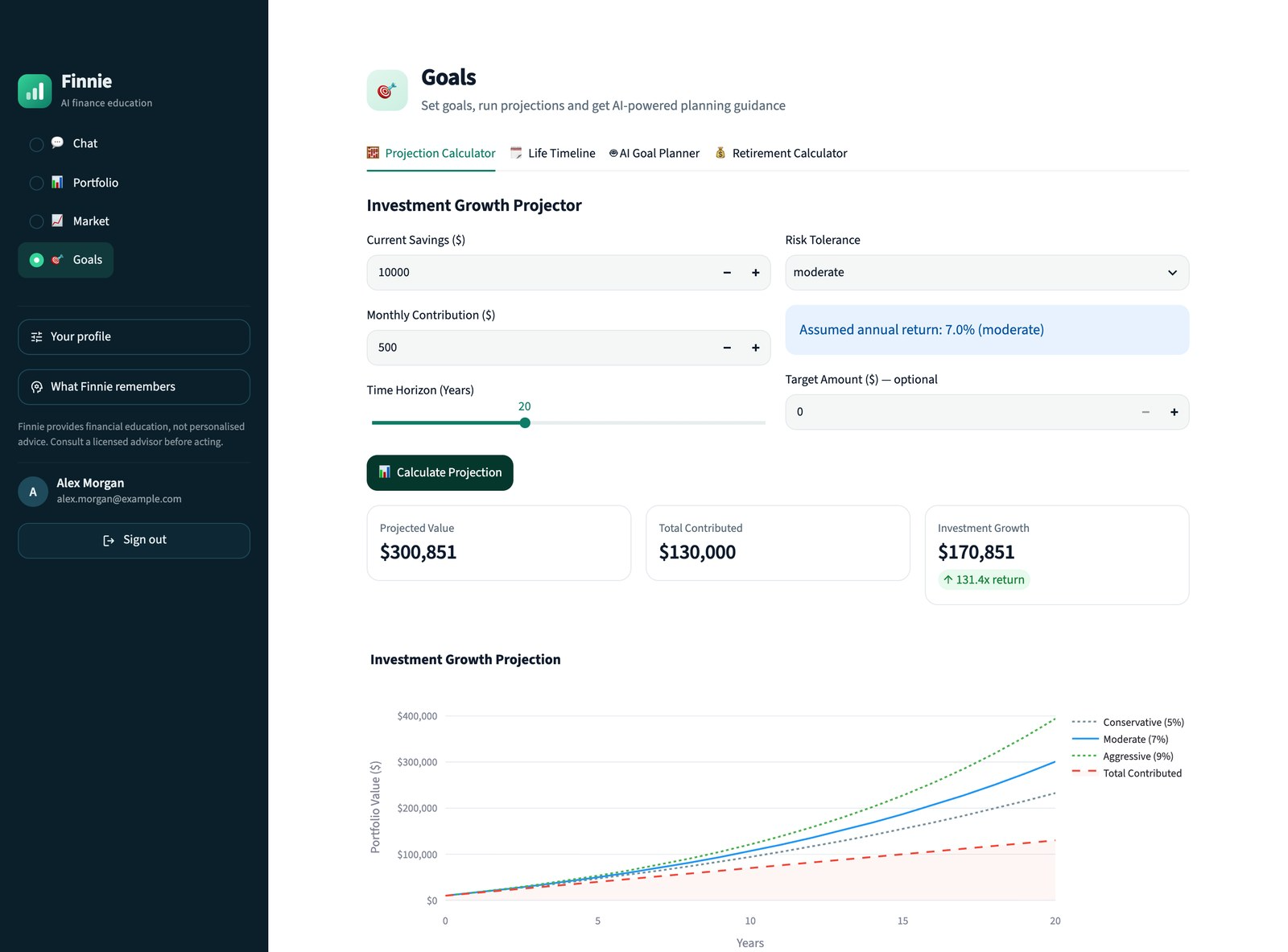
The Goals tab turns "someday" into numbers you can see. Start with the growth projector: enter what you have and what you can add each month, and compare conservative, moderate and aggressive growth against what you actually put in.
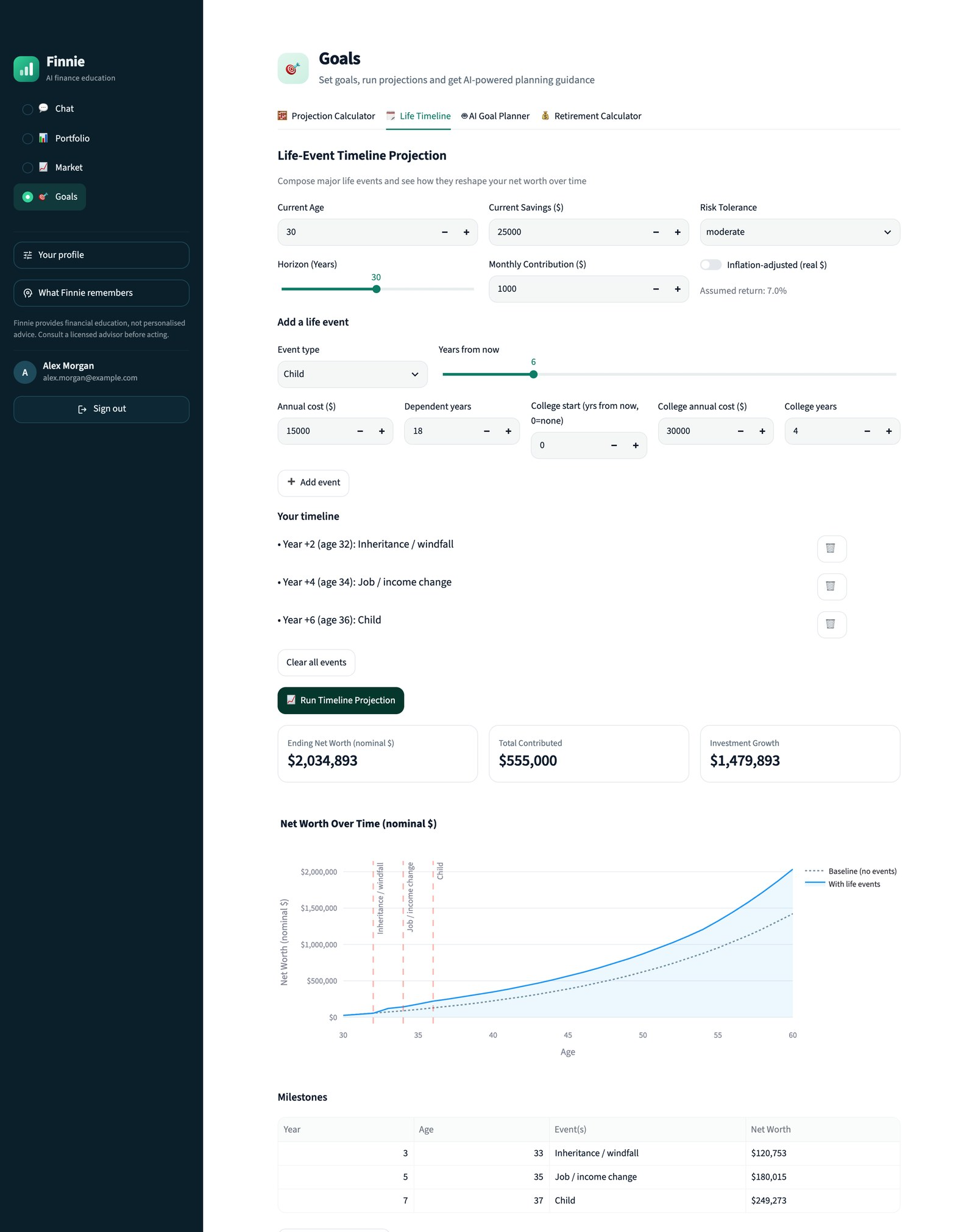
Real lives aren't straight lines, so the Life Timeline lets you drop events onto the years ahead — an inheritance, a raise, a child, a home, college, retirement — and see how each one bends your net-worth curve against a no-events baseline.
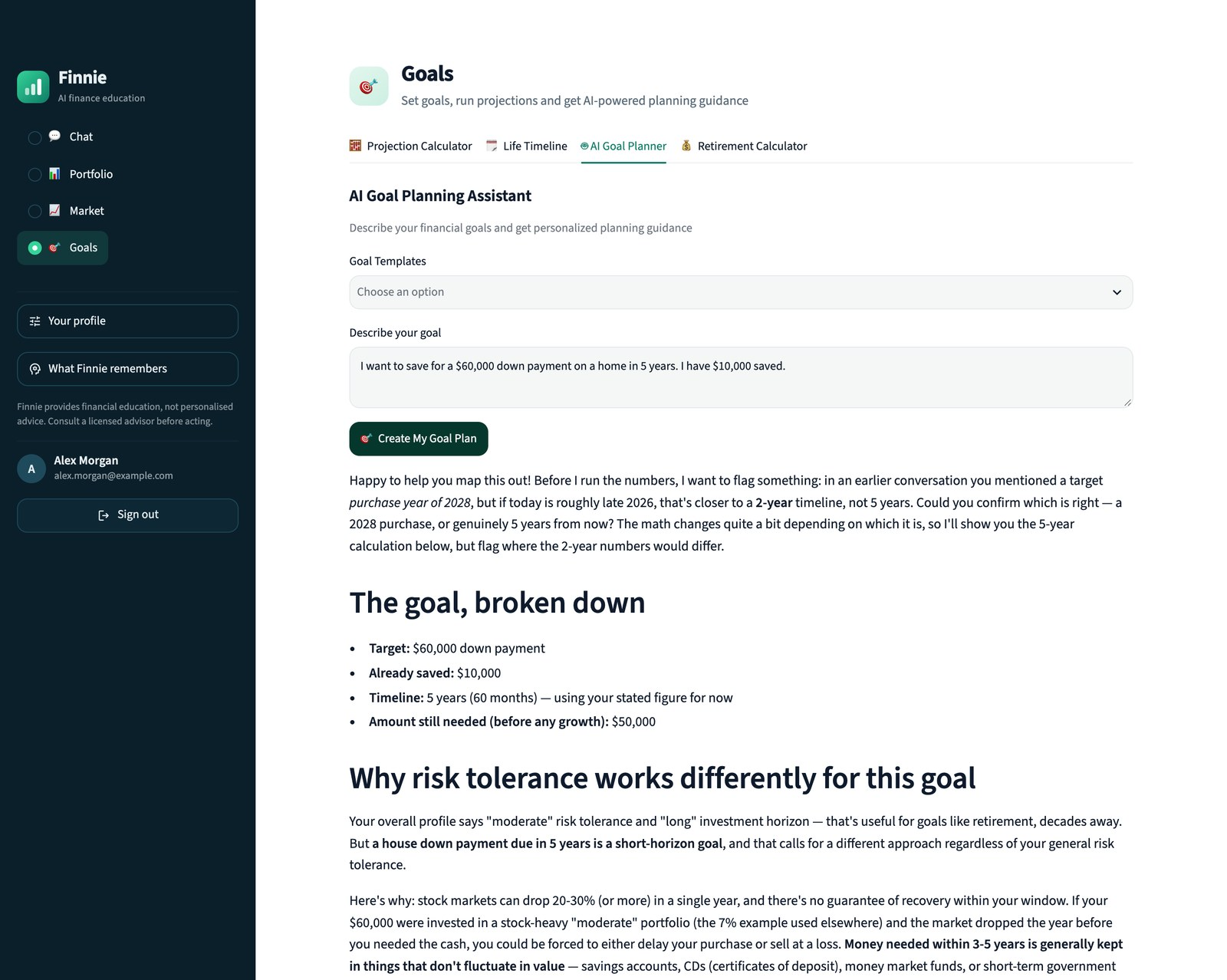
Describe a goal in plain English and the AI Goal Planner builds a plan around it, using what it remembers about you. Asked to plan a $60,000 down payment "in 5 years", it first spotted that Alex had earlier mentioned buying in 2028 and asked which timeline was right, before explaining why money needed within a few years usually belongs somewhere steadier than stocks.
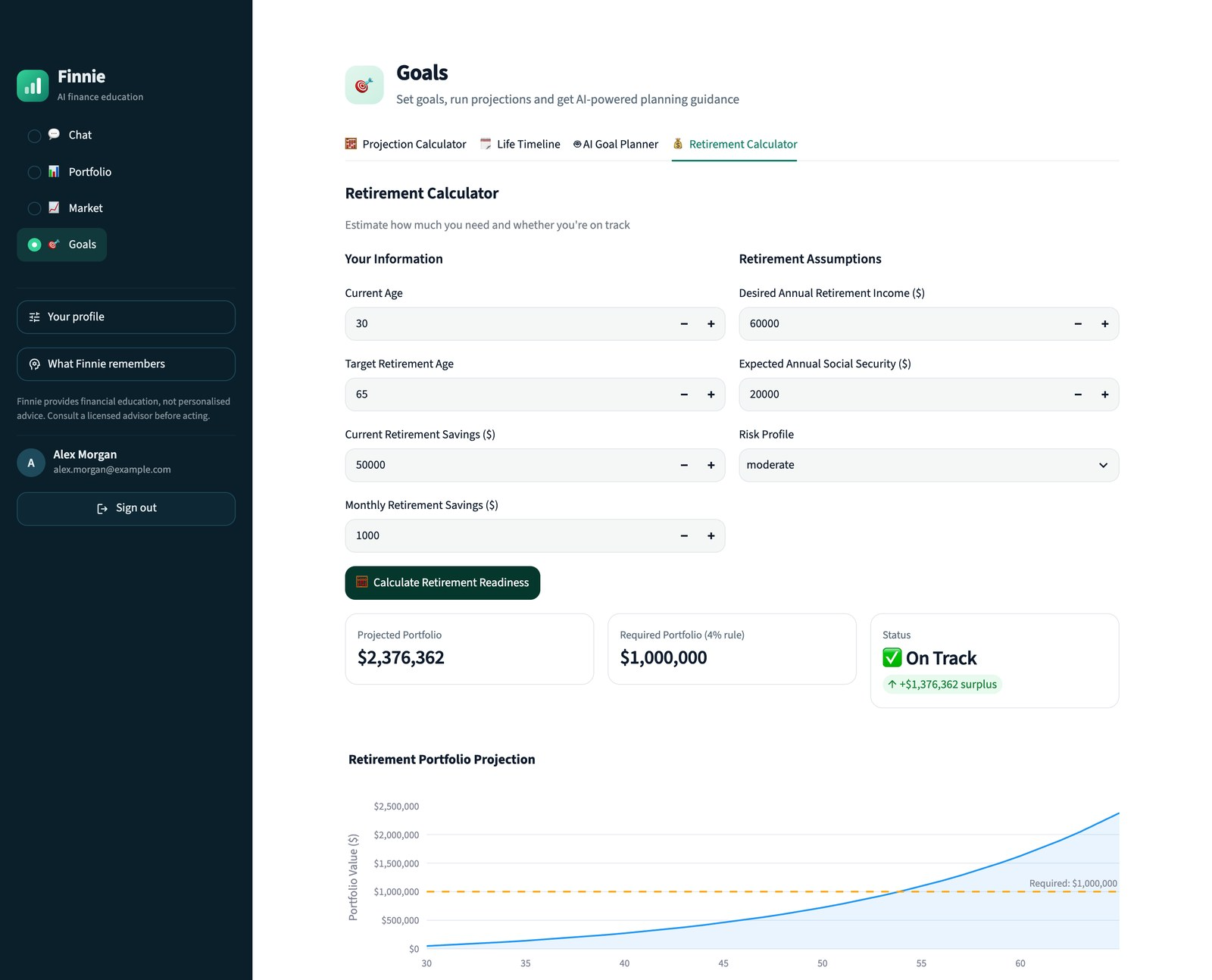
And the retirement calculator answers the question everyone wonders about: am I on track?
Six specialists, one conversation
You never pick an expert; Finnie does. Each question is checked against answers it already has, combined with what you've saved, then handed to the specialist best placed to answer. Off-topic requests get a polite no.
Fits in your pocket
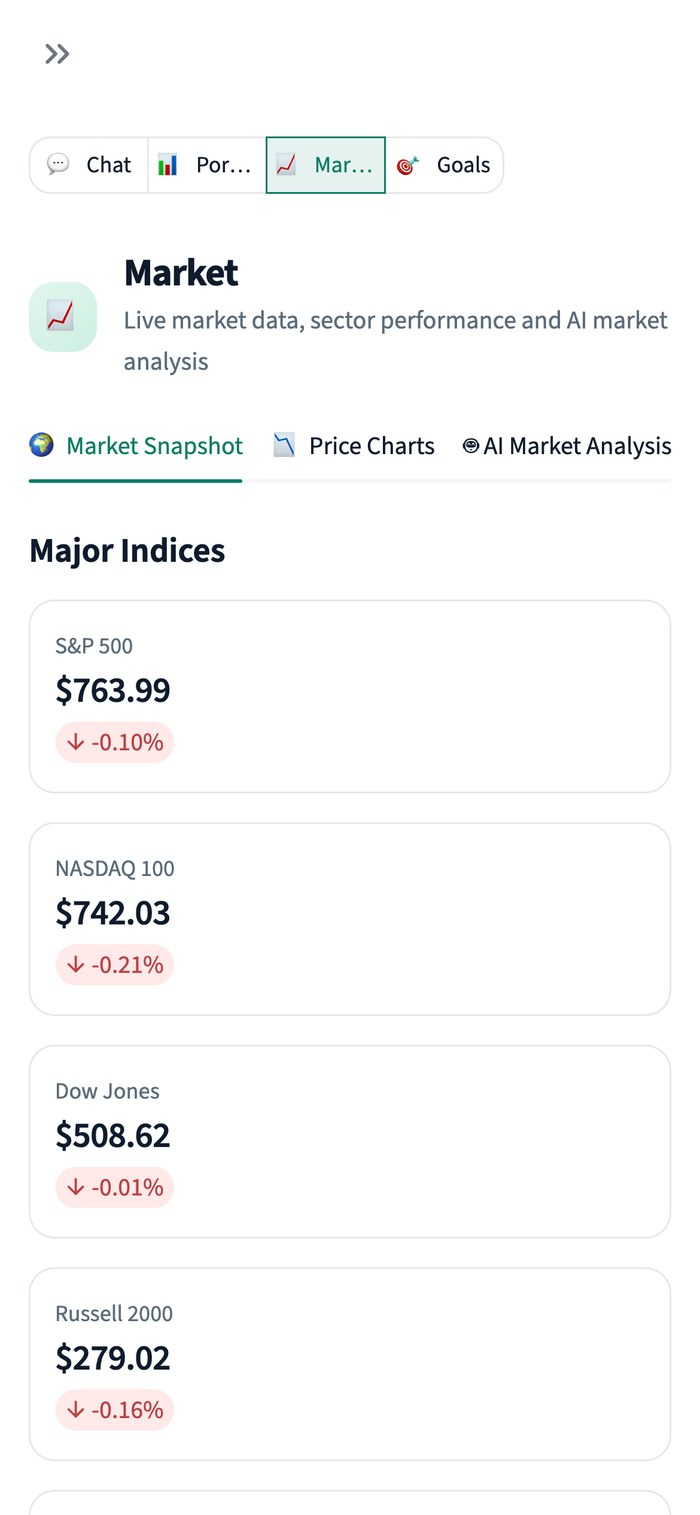
Finnie works on a phone, with tabs along the top in place of the sidebar. Your profile, holdings, conversations and memories follow you from laptop to phone, because they're saved to your account rather than your browser.
Try Finnie
Finnie is for anyone who wants to understand their money instead of just hoping for the best. Ask the question you've been too embarrassed to ask; nobody's keeping score.
Open Finnie and sign in with Google.
A few promises that come with it:
- Your data is yours. Everything is filed under your Google account and kept apart from every other user's. Delete a memory, a conversation or everything Finnie remembers whenever you like.
- Nothing personal is shared. Instant answers are only ever general explanations, never anything built from your own details.
- Education, not advice. Finnie explains how money works so you can make better-informed decisions of your own. It never tells you what to buy or sell, and every answer about investing says so. For decisions about your own situation, talk to a licensed financial advisor.